
Retail inflation slowed to a four-month low of 5.22 per cent in December compared to 5.48 pc in November, mainly due to easing of prices in food basket, according to government data released on Monday. The inflation based on Consumer Price Index (CPI) was 5.48 per cent in November and 5.69 per cent in December 2023.

'Trump had done a deal with the current regime minus Maduro. The current regime is giving Trump entry into Venezuelan oil. They are obeying him and doing whatever he says.' 'They are happy because they have saved their heads by sacrificing only two, Maduro and his wife. Thousands of Venezuelan military leaders would have been jailed or killed in American action had Maduro stayed in power.'

While the economy will wait for a rate cut in December, the banking industry should be happy with the wave of liberalisation -- a big push for growth in bank credit, points out Tamal Bandyopadhyay.

Retail inflation rose at the fastest pace in four months in December 2023 at 5.69 per cent, on account of an increase in prices of vegetables, pulses, and spices, according to government data released on Friday. The annual inflation based on Consumer Price Index (CPI) was at 5.55 per cent in November and 5.72 per cent in the year-ago month. As per the data released by the National Statistical Office (NSO), the rate of price rise in the food basket, which constitutes nearly half of the CPI, increased to 9.53 per cent in December 2023, as against 8.7 per cent in the preceding month, and 4.19 per cent in December 2022.

Sensex sinks 573 pts on global tensions and high crude prices

India's manufacturing sector activity eased in September, as new orders, output and input buying rose at the slowest rates in four months, while job creation retreated to one-year low, a monthly survey said on Wednesday.

Sanjay Malhotra takes charge as the 26th RBI governor at a time when headline retail inflation has shot up to 6.2%.

Reserve Bank of India (RBI) Governor Sanjay Malhotra said the repo rate cut in the February meeting of the monetary policy committee (MPC) was due to inflation aligning with the target and recognising the fact that monetary policy is forward-looking.

'The statistical confidence bands of the fan charts of the forecasts will provide a better sense of the potential variability of outcomes.'

Owing to uncertainties on higher inflation and muted growth in the United States (US), coupled with concerns around America's rising debt and tariffs imposed by President Donald Trump, the world's largest economy has become the epicentre of an unabated record rally in prices of precious metals.

Gold prices are expected to maintain their upward momentum though some consolidation could set in ahead of the US Federal Reserve's policy decision on September 17, analysts said. Traders will focus on the trade inflation data to gauge the impact of tariffs, inflation numbers from major economies including UK and Euro zone, along with monetary policy meetings of Bank of England and Bank of Japan which will provide more guidance for bullion prices, they added.
Amid the ongoing global tariff war, Reserve Bank Governor Sanjay Malhotra on Wednesday said he is more worried about its impact on growth than inflation. Speaking to the media after presentation of the first bi-monthly monetary policy for the current financial year, Malhotra said, RBI has reduced the growth forecast for 2025-26 by 20 basis points to 6.5 per cent.

'...not merely in managing fiscal mathematics, but in demonstrating conservatism and prudence within that framework.' 'Looking forward, we believe sufficient growth drivers exist -- ranging from government reforms to revival in consumption to favourable monsoons. Numerous factors support the Indian economy.'
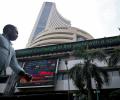
Among the Sensex firms, Bharat Electronics Ltd, Mahindra & Mahindra, Adani Ports, HCL Technologies, Eternal, Infosys, Bharti Airtel, Sun Pharmaceuticals, Larsen & Toubro, Hindustan Unilever and UltraTech Cement were the gainers. Bajaj Finance, Tata Motors Passenger Vehicles, Kotak Mahindra Bank, PowerGrid and Tata Steel were among the laggards.

Unprecedented rains and floods in the northern region in the past few days have not only caused extensive damage to lives and property but have also impacted business and commercial establishments. Vegetable prices have gone through the roof in the national capital and many other parts of the country since rains started pouring earlier this month. Traders say vegetable prices would come down only after roads open and skies clear, even as water in the fields will take time to recede.

The Reserve Bank of India's (RBI's) caution on inflation, highlighted during the recent monetary policy meeting, may put investors' faith in fast moving consumer goods (FMCG) stocks to test, analysts said. They, however, believe FMCG stocks may ride through this near-term investor anxiety as related companies are, typically, well-equipped to handle inflation due to their pricing power and steady demand for essential goods.

Persisting uncertainties related to the US trade policies pose downside risk to the overall demand in the Indian economy while the inflation outlook for the near term has become more benign than anticipated earlier, RBI said in its latest bulletin on Thursday. In the August bulletin, the Reserve Bank of India (RBI) also said that India's sovereign rating upgrade by S&P bodes well for capital inflows and sovereign yields, going forward.

Wholesale price-based inflation remained in the negative territory for the fifth straight month in August at (-)0.52 per cent, but prices of food articles and fuel showed an uptick. The wholesale price index (WPI) based inflation rate has been in the negative since April and was (-)1.36 per cent in July. In August last year it was 12.48 per cent. Inflation in food articles remained in double digit at 10.60 per cent in August, lower than 14.25 per cent in July.

'It takes time and the experience of a few market cycles to develop awareness about one's true risk appetite.'
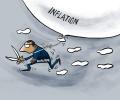
Wholesale price based inflation declined to a 3-month low of 1.89 per cent in November on cheaper food items, and experts predicted a 0.25 per cent interest rate cut by the RBI in the policy review in February. The Wholesale Price Index (WPI) based inflation was 2.36 per cent in October 2024. It was 0.39 per cent in November, last year. In August, 2024, it was 1.25 per cent.

'An asset must generate income. Equities yield dividends, bonds pay coupons, deposits give interest, and real estate earns rent.' 'Gold, silver, and even Bitcoin produce no income, they merely store value. So, they should not be compared to productive assets.'

Mixed views were expressed by top economists on the Reserve Bank of India's (RBI) Monetary Policy Committee's (MPC) decision to hold the repo rate at 5.5% and maintain a neutral stance. While some say the decision was as expected and one more rate reduction is expected this fiscal, there is also a view that rate cut by MPC was warranted given the evolving global situation.

Among Sensex firms, Bharat Electronics, Eternal, Mahindra & Mahindra, Kotak Mahindra Bank, Tata Motors and Power Grid were the gainers. However, Adani Ports, ITC, UltraTech Cement and Titan were among the laggards.

The growth of India's services sector eased in September from the recent high in August, as new business and activity expanded at slower rates, according to a monthly survey released on Monday.

The short-term inflation outlook for India is benign, and the expectation of a normal monsoon and moderating global prices of key imported items give credence to the projections made by the RBI and IMF, the Economic Survey said on Monday. However, to ensure long-term policy stability, the Survey 2023-24 suggested making focused efforts to increase the production of major oilseeds, expanding the area under pulses, and assess the progress in developing modern storage facilities for specific crops.

Retail inflation breached the Reserve Bank's upper tolerance level, soaring to a 14-month high of 6.21 per cent in October mainly on account of rising food prices. Inflation based on the consumer price index (CPI) was 5.49 per cent in September and 4.87 per cent in the year-ago month. Retail inflation trended below the RBI's upper tolerance band of 6 per cent since September last year.

TDP supremo N Chandrababu Naidu consistently emphasises, among others, the issue during his campaign, alleging that the state has been supplying poor quality liquor while profiting immensely from 'inflated' prices, running to thousands of crores of rupees.

'Allocating 5 to 10 per cent of one's portfolio and staying disciplined through market cycles helps in having a positive investment experience.'
Uncertainties over the impact of the United States' (US') tariffs on India, along with the ongoing transmission of past rate cuts, prompted the members of the Reserve Bank of India's Monetary Policy Committee (MPC) to maintain the status quo during the August meeting, the minutes showed. While some of the external members highlighted their concern over growth, the internal members cited the one-year headline inflation rate overshooting the 4 per cent target.

'The US reciprocal tariff has added another element of uncertainty and the central bank may prefer to wait and get further clarity.'
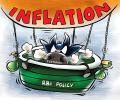
Amid a debate on the basis of a monetary policy stance, one may be curious enough to know how non-food retail inflation has behaved over the years in India. Let the eager souls catch a glimpse of facts. In the past 10 years, non-food inflation came down below 4 per cent on two occasions - pre-Covid period of 2019-20 and now in the first four months of the current financial year (FY25).

The finance minister said while contribution of primary and fuel items to inflation has declined of late, certain manufacturing items are leading to its rise.
The Reserve Bank on Wednesday retained the retail inflation projection at 4.5 per cent for fiscal 2024-25, with Governor Shaktikanta Das stressing that the central bank will have to closely monitor the price situation and keep the "inflation horse" under tight leash lest it may bolt again. Unveiling the October bi-monthly monetary policy, the Governor also said the flexible inflation targeting (FIT) framework has completed 8 years since its introduction in 2016 and is a major structural reform of the 21st century in India.

Prospects of a bumper kharif harvest are expected to lower food inflation in the coming months, making the country's inflation outlook benign, the Union Ministry of Finance (FinMin) said in its monthly economic report for October released on Monday.

Daily essentials and food products will be cheaper from Monday, as leading FMCG companies have slashed prices, extending GST cut benefits to consumers.

Credit quality of Indian corporate is expected to be stable in the second half of the current financial year (H2FY26), supported by easing monetary cycle, and declining inflation, coupled with income-tax relief and rationalisation of the goods and service tax (GST) rates, among others.
Reserve Bank of India (RBI) Governor Sanjay Malhotra, with Deputy Governors Poonam Gupta, Swaminathan J, T Rabi Sankar, and M Rajeshwar Rao, responded to a range of queries in the post-policy interaction with the media

Soaring vegetable prices pushed the retail inflation rate to a nine-month high of 5.49 pr cent in September, according to government data released on Monday. The consumer price index (CPI)-based retail inflation rate was 3.65 per cent in August and 5.02 per in September 2023. The previous high inflation rate was witnessed in December 2023 at 5.69 per cent.

For the time being, the RBI is done with the cuts. A cut in October, which many are still predicting, is not certain. Of course, if growth nosedives, the script will be different, expects Tamal Bandyopadhyay.

Gold prices are likely to remain in a consolidation phase in the near term, but the overall bias will continue to stay positive amid heightened expectations of a US Federal Reserve rate cut in its September policy meeting, analysts said. Traders will closely track US macroeconomic data, such as Q2 GDP, PCE inflation, and speeches from Fed officials, which will provide more insights into the monetary policy stance of the Federal Reserve and the trajectory of the bullion sentiment, they added.
